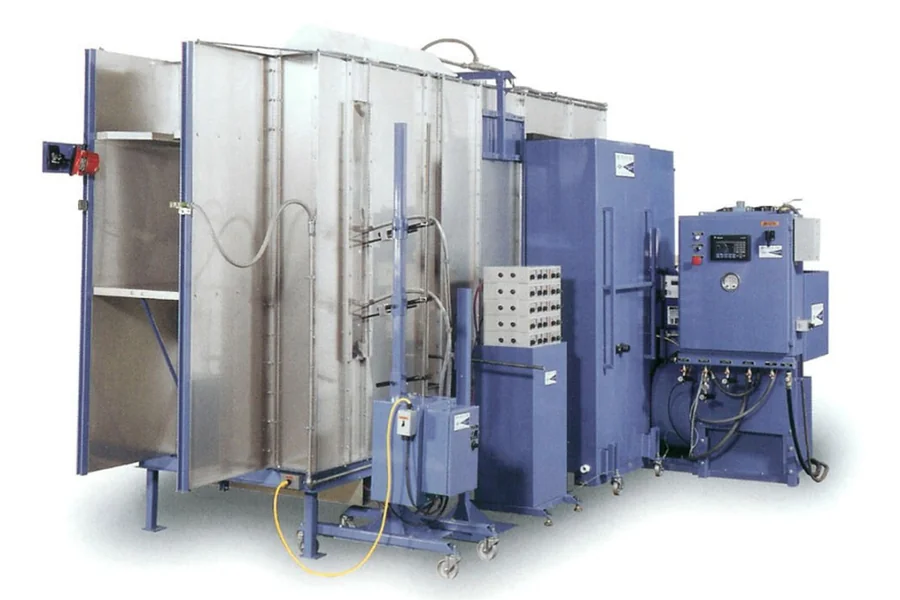
Finishing lines often feel the pressure of tight schedules, especially as demand for faster turnaround grows. A well-engineered powder coating equipment package can significantly shorten cure-to-pack times without sacrificing finish quality. Manufacturers choosing upgraded powder coating systems soon notice that certain features deliver measurable gains in speed, consistency, and throughput.
Forced Air Convection Systems
Forced air convection systems work by circulating heated air evenly throughout the oven chamber. This constant movement ensures the coating reaches its target cure temperature quickly and uniformly, reducing the chance of cold spots or uneven finishes. Powder coating equipment for sale that includes high-output recirculation fans can dramatically cut overall bake cycles.
Airflow precision matters as much as heat output. Powder coating systems that distribute air through engineered plenums maintain consistent temperature zones, allowing parts of different shapes and masses to cure at the same rate. The result is predictable performance that keeps production flowing steadily.
High-Performance Burners/Heating Elements
High-performance burners and electric heating elements increase ramp-up speed inside the curing oven. Faster temperature rise means less waiting between batches, which directly shortens total cycle time. Consistent thermal output also helps maintain stable temperature once the setpoint is reached.
Heat delivery design plays a major role in efficiency. Powder coating equipment built with modulating burners or multi-stage electric elements provides tighter temperature control during ramp-up and soak phases. This stabilizes the cure profile and helps operators move parts to packing sooner.
Superior Thermal Insulation
Superior insulation allows ovens to retain heat more effectively, reducing energy loss and cutting the time needed to recover after doors open. High-density wall and roof panels help keep internal temperatures stable—even during heavy-duty production runs. Powder coating machines with 4–6 inches of mineral wool or ceramic fiber insulation are known for their ability to sustain heat with minimal fluctuation.
Better insulation also extends equipment longevity. By minimizing external heat transfer, the oven shell stays cooler, protecting wiring, electronics, and the surrounding workspace. The improved thermal stability increases throughput and reduces secondary delays caused by inconsistent curing.
Integrated Infrared (IR) Zoning
Integrated IR zoning provides targeted heat to warm the coating layer quickly during the initial gel stage. Infrared energy penetrates the coating surface, helping it flow out before the convection heat takes over to finalize the cure. Powder coating equipment systems that combine IR and convection can reduce overall cure cycles by several minutes per batch.
Smart zoning allows operators to adjust IR output based on part shape, coating thickness, and material. This flexibility eliminates the risk of under-gelling or overbaking sensitive substrates. With IR assist, even large or thick parts reach gel stage faster, improving production speed without compromising quality.
Automated/Integrated Cooling Tunnels
After curing, parts need controlled cooling to reach handling temperature quickly. Automated cooling tunnels move air across freshly cured surfaces, reducing the waiting period before packing or assembly. Powder coating equipment for sale that includes integrated cooling tunnels helps streamline workflow from oven to final inspection.
Cooling tunnels also protect coating quality. By managing airflow direction and temperature, these systems prevent condensation, warping, or accidental surface marks. Faster cooling keeps the entire line moving and reduces bottlenecks at the end of the finishing cycle.
Advanced Programmable Logic Controllers (PLC/HMI)
Modern PLC/HMI platforms bring precision and repeatability to powder coating systems. Operators can store recipes, monitor performance trends, and adjust oven parameters with confidence. These controls minimize human error and ensure that every batch receives the correct thermal profile.
Advanced controllers also support real-time diagnostics. Temperature deviations, fan performance issues, or burner irregularities are flagged immediately, allowing quick correction. Improving system awareness helps maintain optimal cure conditions and shortens overall cycle time.
Variable Frequency Drives (VFDs) on Fans
Variable Frequency Drives allow fans to adjust speed dynamically based on load conditions, cure requirements, and airflow demand. Lower fan speeds during heat-up reduce energy consumption, while higher speeds during active cure ensure full convection performance. Powder coating equipment fitted with VFDs operates more efficiently and keeps temperature distribution consistent.
VFDs also extend component life. Fans operating at reduced speed experience less wear, and smoother operation reduces mechanical stress throughout the system. Stable airflow shortens cure time while supporting a cleaner, more controlled bake environment.
Automated Material Handling/Conveyor Integration
Automated material handling is one of the most impactful upgrades for shops aiming to shorten cure-to-pack time. Integrated conveyors move parts continuously through preheat, application, curing, and cooling stages without manual handling delays. Powder coating equipment packages that include automation reduce labor demands and eliminate long idle gaps between batches.
Conveyor integration also ensures consistent line speed. Operators can synchronize oven dwell time with conveyor rate, guaranteeing every part receives identical treatment. This level of repeatability produces a steady output pace that supports tighter production scheduling.
Manufacturers looking to adopt advanced powder coating equipment benefit from partners who specialize in high-performance finishing systems. Reliant Finishing Systems offers engineered solutions that enhance throughput, improve efficiency, and support rapid cure-to-pack workflows.