
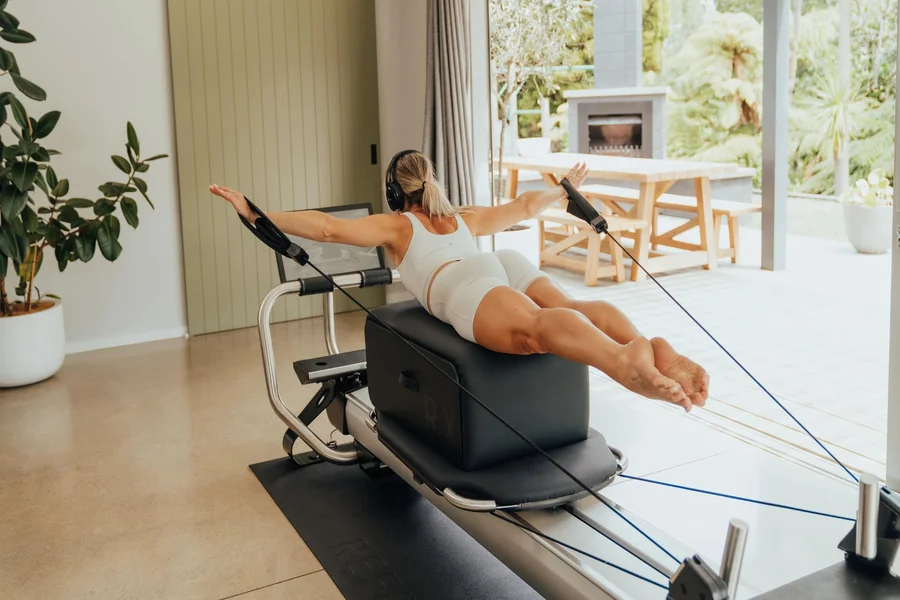
Starting a new exercise routine often brings a familiar burst of enthusiasm, followed by uncertainty about what to do next. A pilates reformer machine offers numerous movement possibilities, but having so many options can make the first few sessions surprisingly confusing. Should you focus on resistance, flexibility, coordination or simply learning the equipment? Rather than attempting everything immediately, approaching your first month as a gradual learning process can make training more rewarding. By developing familiarity with the reformer before increasing difficulty, you can establish practical habits and discover which exercises genuinely suit your body, abilities and long-term fitness ambitions.
Begin By Understanding How Your Body Moves
Before setting performance targets, spend time observing your natural movement patterns. Notice whether one side feels more coordinated, which positions require additional concentration and where flexibility might influence your technique. A pilates reformer machine provides opportunities to explore these differences through controlled exercises using springs, straps and a moving carriage. Rather than treating every imbalance as a problem, use these observations to understand your starting point. Simple movements performed slowly can reveal information that faster exercise sometimes conceals. This initial awareness gives you a practical reference when assessing your progress over the following weeks.
Week One Focuses On Learning The Equipment
Your first week should concentrate on familiarity rather than intensity. Learn how the carriage travels, where the footbar positions are located and how different spring combinations influence resistance. Before using a pilates reformer machine independently, follow its operating instructions and become familiar with the safety features. Practise basic movements under suitable guidance, paying attention to controlled starts and stops. Avoid rushing between exercises or making unfamiliar adjustments while positioned on the carriage. The objective is to become comfortable with the equipment’s behaviour so that operating it eventually feels straightforward rather than distracting.
Week Two Introduces Greater Movement Precision
Once the fundamental movements become familiar, direct your attention towards how each repetition is performed. Experiment with slower tempos, deliberate breathing and smoother transitions between positions. A pilates reformer machine can challenge coordination because the carriage responds continuously to the forces applied through your body. This makes it useful for practising controlled movement rather than simply completing repetitions. Notice whether your shoulders remain comfortable, whether you can maintain your intended position and whether the resistance allows consistent technique. Improvement during this stage may be subtle, appearing as greater confidence and fewer unnecessary corrections.
Week Three Expands Your Exercise Possibilities
By the third week, you may feel ready to explore additional movement patterns that match your ability. Instead of selecting exercises randomly, organise sessions around different functions such as pushing, pulling, controlled rotation and lower-body movement. A pilates reformer machine allows these patterns to be explored from several positions, although appropriate exercises depend on your experience and instruction. Introducing one unfamiliar movement at a time makes it easier to recognise what changes. Keep familiar exercises in your routine as reference points, allowing you to distinguish genuine improvement from the novelty of learning something different.
Week Four Encourages Independent Decision Making
During the fourth week, begin considering how you would structure a complete workout without continually searching for new instructions. Select a manageable combination of exercises, organise their sequence and identify the adjustments required between them. Using a pilates reformer machine becomes more efficient when you understand why particular movements belong in your programme. For example, you might begin with familiar footwork before progressing to exercises involving straps and trunk stability. Independence does not mean abandoning professional guidance. It means developing enough understanding to recognise suitable challenges, adjust your expectations and avoid unnecessarily complicated workouts.
Learn To Recognise Productive Exercise
A demanding workout is not necessarily an effective one. Trembling muscles, exhaustion and soreness can occur during physical activity, but none should automatically be interpreted as evidence of progress. With a pilates reformer machine, useful indicators include maintaining control throughout the movement, completing exercises with consistent technique and gradually managing appropriate challenges. Consider how you feel during and after training rather than judging success exclusively by difficulty. If discomfort changes your movement or becomes painful, stop and reassess. Better training decisions come from understanding the purpose of an exercise rather than trying to make every session harder.
Create A Training Environment That Encourages Concentration
Your surroundings can influence how comfortably you practise. A cluttered room, poor lighting or constant interruptions may make it harder to concentrate on technique. Position your pilates reformer machine where there is adequate clearance for the carriage, straps and movements extending beyond the frame. Keep any required accessories organised and inspect the equipment according to the manufacturer’s instructions. Establishing a consistent workout area also reduces the decisions involved in beginning each session. You do not need an elaborate home studio; a practical, accessible space that supports safe and uninterrupted movement is more valuable than decorative additions.
Choose Equipment That Supports Continued Learning
If you are considering purchasing your first reformer, think beyond the exercises you already know. A suitable model should accommodate your physical dimensions, provide understandable resistance adjustments and include clear operating guidance. When comparing a pilates reformer machine with other available options, consider carriage dimensions, construction, accessories, warranty conditions and replacement-part availability. Some features may become more relevant as your experience grows, while others may never be necessary. Choosing equipment that suits your actual requirements is preferable to paying for complexity that contributes little to your training.
Plan Your Next Month Around What You Have Learned
At the end of four weeks, review which exercises you enjoyed, which required additional instruction and what practical obstacles affected consistency. A pilates reformer machine can remain useful as your abilities develop, but progress need not involve continually adding new movements. You might improve control, refine existing techniques or establish a more reliable weekly schedule. Set one or two achievable priorities for the next month and continue adapting your programme as needed. A sustainable approach gives your training direction without turning every session into a performance test.
Frequently Asked Questions
Do I need previous Pilates experience to begin? No, although introductory instruction is recommended to help you understand equipment operation, exercise positioning and appropriate resistance.
How long should my first reformer sessions be? Session length depends on your fitness, experience and chosen exercises. Begin with manageable workouts that allow you to maintain concentration and sound technique.
Should I increase spring resistance every week? Not necessarily. Progress can involve better movement control, improved coordination or more demanding exercise variations without increasing resistance.
Can a pilates reformer machine be used every day? Training frequency depends on exercise intensity, recovery and individual circumstances. Include appropriate rest and vary the demands of your sessions.
What should I do if an exercise feels uncomfortable? Stop the movement, check your positioning and seek guidance from a qualified instructor or healthcare professional when appropriate.
When will I notice improvements from using a pilates reformer machine? Progress varies between individuals. Regular, well-structured practice can help you develop technique and confidence, while physical adaptations depend on your starting point and training consistency.